GET A QUOTE

HYUNDAI ADAS CALIBRATION

Precision Tuning for Your Hyundai SmartSense Features

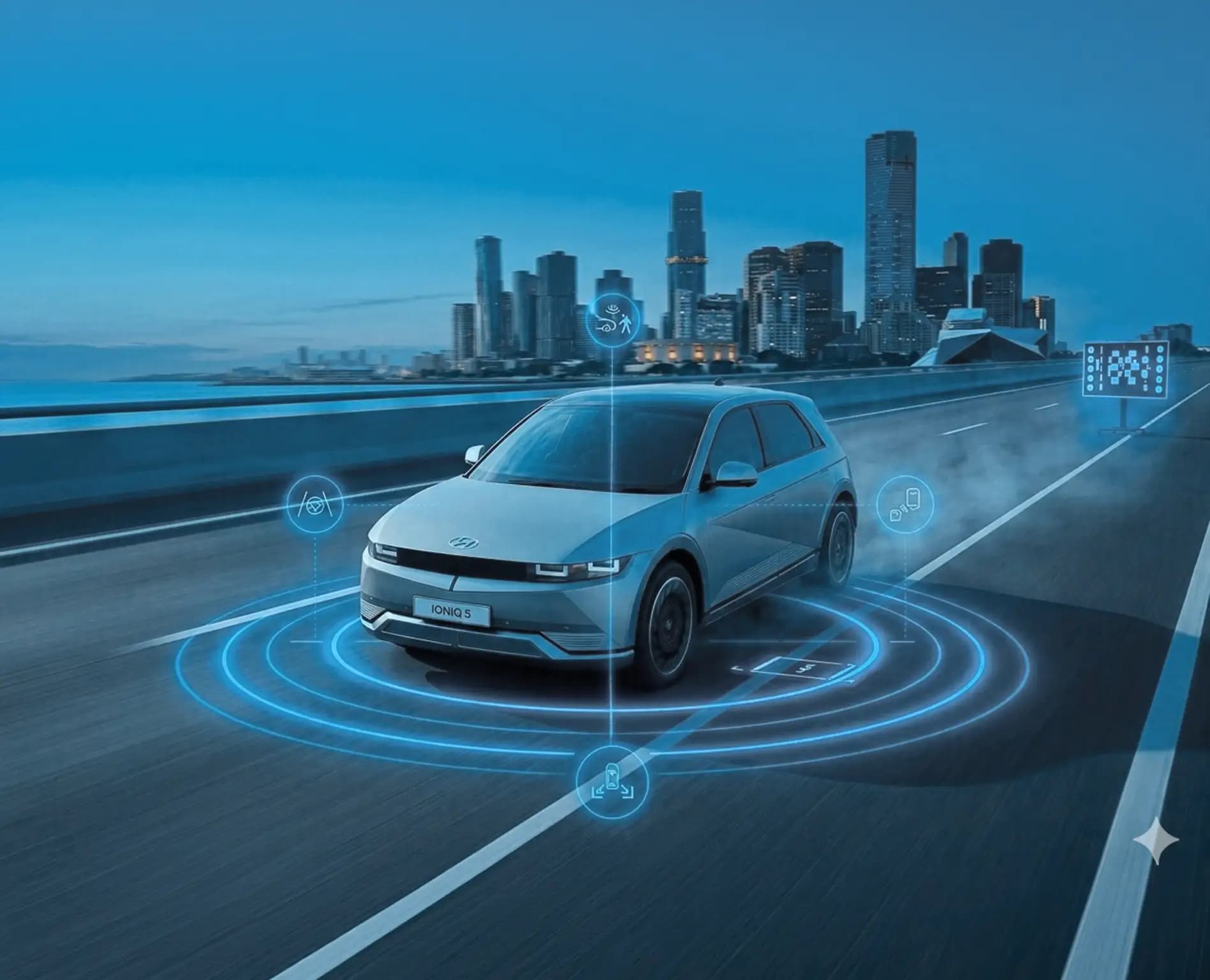
Modern Hyundai vehicles are engineered with the Hyundai SmartSense safety network, an integrated system of cameras and radars designed to protect you on the road. To ensure features like Lane Following Assist and High Beam Assist remain accurate, professional calibration is required after any structural or windshield service.

CALL NOW

03 9131 8788

SCHEDULE AN APPOINTMENT

WHAT WE DO

Calibration Services for Hyundai Vehicles

We provide calibration services for every ADAS module present on your Hyundai vehicle, with quality that is comparable to what you get from original manufacturers.

Is your Hyundai Driving Safely?

Your Hyundai’s SmartSense features can be compromised by:

  • Adaptive cruise control failing to maintain set distances or braking abruptly.
  • Forward collision warning alerts triggering without any visible obstacles.
  • Lane Keeping Assist pulling the steering wheel or failing to detect road markings.
  • Error messages appearing after a wheel alignment, suspension lift, or windshield replacement.
  • Ignoring these signs of malfunctioning can lead to delayed system responses to the road’s dangers. If your Hyundai feels off, a certified Hyundai SmartSense calibration is necessary to restore the standard safety features.

    Don't endanger your safety while on the road.

    Image
    image

    GET QUOTE

    WE CALIBRATE ALL MAJOR VEHICLE BRANDS

    BOOK CALIBRATION TODAY

    How ADAS Calibration Works on Hyundais

    1. Pre-Calibration Inspection

    Before adjustments begin, our technicians perform a deep-system health check:

  • Scanning the vehicle using Hyundai GDS (Global Diagnostic System) software.

  • Identifying any stored Diagnostic Trouble Codes in the ADAS control module.

  • Inspecting the front-view camera and radar housing for physical shifting or debris.

  • Adjusting tyre pressure and verifying steering angle sensor neutrality.

  • Ensuring the vehicle is at the correct kerb weight with a standard fuel level.

  • 2. Types of Calibration Methods

    Static Calibration

  • The vehicle is positioned in a controlled environment with specific lighting.

  • Hyundai-specific patterned targets are set at millimetre-perfect intervals.

  • The GDS-Mobile interface is linked to the Hyundai OBD port.

  • The system recalibrates the digital "field of vision" for the front camera and radar.

  • Dynamic Calibration

  • The vehicle is driven on marked roads at consistent speeds (usually 40–90 km/h).

  • The software learns the road environment in real-time.

  • The system verifies:

  • Lane boundary recognition for steering assistance.

  • Object tracking for forward collision warning accuracy.

  • Proximity detection for adaptive cruise control functionality.

  • 3. System-by-System Calibration Process

  • Forward-Facing Camera (Windshield)

  • Targets are placed to reset the camera's pitch, yaw, and roll.

  • Ensures accurate Pedestrian Detection and Traffic Sign Recognition.

  • Verified through a dynamic road test for active lane-centering.

  • Front Radar Unit (Grille/Lower Bumper)

  • Laser-levelled alignment to ensure the radar beam is parallel to the road.

  • Essential for the timing of the forward collision warning system.

  • Recalibrated to ensure adaptive cruise control tracks the correct lead vehicle.

  • Blind-Spot Collision-Avoidance (Rear Bumper)

  • Corner radar sensors are calibrated to detect vehicles in adjacent lanes.

  • Verifies the Rear Cross-Traffic Alert safety zone.

  • Surround View Monitor (SVM)

  • 360-degree camera stitching is aligned for a seamless overhead perspective.

  • Ensures parking guidance lines accurately represent the vehicle's path.

  • 4. Post-Calibration Verification

    As a final calibrations check, our technicians conduct:

  • A secondary full re-scan of all modules to confirm no fault codes persist.

  • A real-world validation drive to test adaptive cruise control response.

  • Digital logging of calibration results for warranty and safety records.

  • Issuing a formal post-calibration compliance certificate to the owner.

  • Key Tools Used in Sensing Suite Calibration

    Tool Purpose
    Hyundai GDS / GDS-Mobile The primary factory-level diagnostic and coding software.
    OEM Hyundai Target Boards Specific patterns used to reset camera focal points.
    Laser Alignment Frame Ensures the vehicle and targets are perfectly squared.
    Digital Tyre Pressure Gauge Crucial for maintaining the correct chassis height during scans.
    GDS-Mobile VCI The wireless interface for real-time sensor data streaming.

    Why Hyundai Owners Prefer ADAS Melbourne Calibration

  • Fully restored protective capabilities of Hyundai SmartSense.
  • We resolve phantom braking and annoying dashboard warning lights.
  • We use Hyundai-specific software for dealer-level accuracy.
  • Fast turnaround times for all models, from the i30 to the Palisade.
  • They get an official compliance certificate for log keeping and insurance.
  • Why Mechanics Also Prefer ADAS Melbourne Calibration

  • Access to specialised Hyundai calibration targets without the overhead costs.
  • Expert technical support for complex ADAS fault code resolution.
  • Detailed post-calibration reports for your customers' peace of mind.
  • Reliable, precise service that reduces your workshop's liability.
  • BOOK FORD ADAS CALIBRATION TODAY

    Frequently Asked Questions

    What exactly is Hyundai SmartSense, and why does it require calibration?

    Can I recalibrate my Hyundai's safety cameras at home?

    Do I need an ADAS calibration after getting a wheel alignment on my Hyundai?

    How long does a professional Hyundai SmartSense calibration typically take?

    Will my insurance cover the cost of calibrating my Hyundai's ADAS after an accident?

    CAR MODEL COVERAGE

    WE CALIBRATE ALL MAJOR VEHICLE BRANDS