SERVICES
ADAS Camera Calibration
Radar & Sensor Calibration
Windscreen Replacement Calibration
Lane Departure & Blind Spot Calibration
Adaptive Cruise Control (ACC) Calibration
Fault Code Diagnostics & ECU Reset
Roadworthy / Compliance Calibration
Mobile ADAS Calibration (Trade Partners)
360 Camera Calibration
Coding & programming
Call us Now!
03 9131 8788
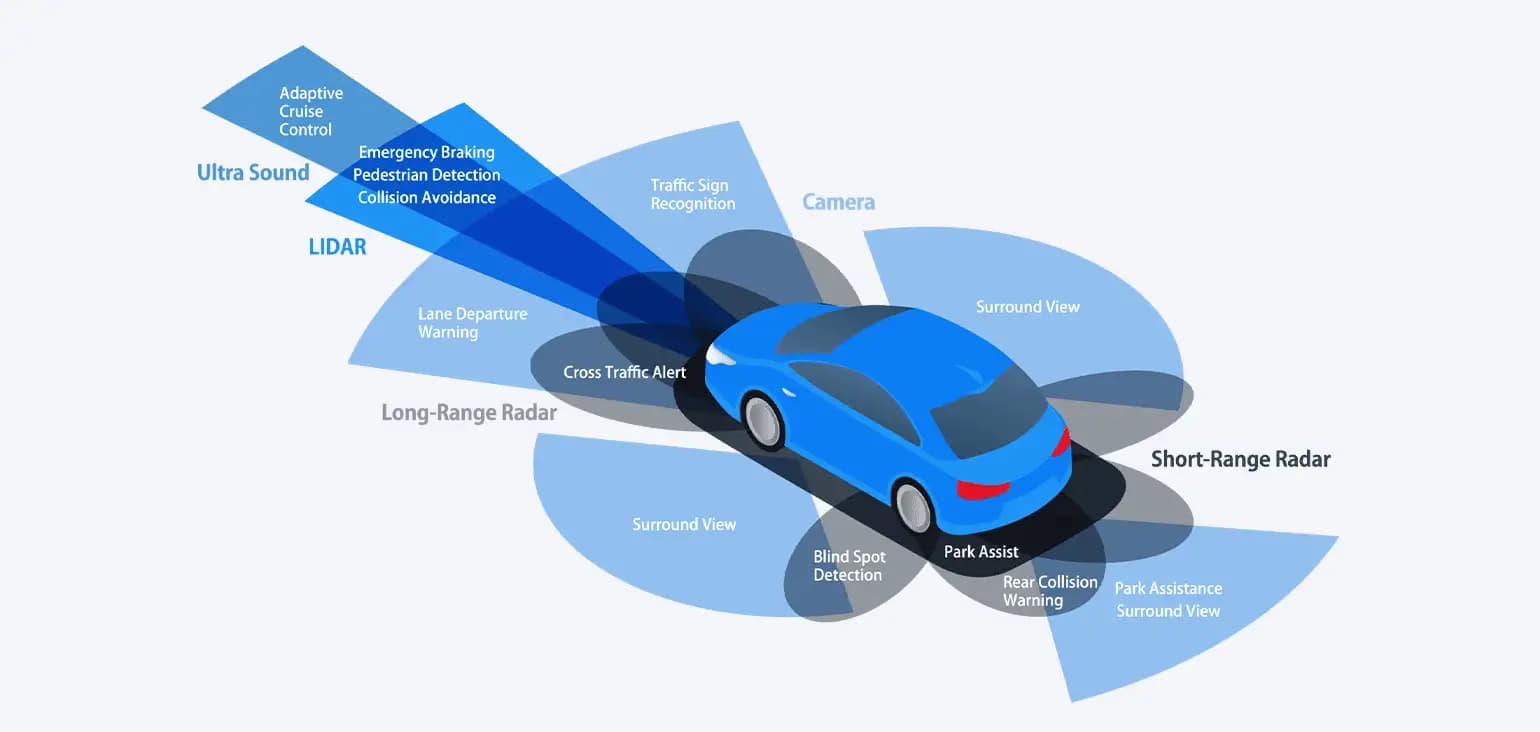
ADAS stands for Advanced Driver Assistance Systems – a suite of intelligent safety and convenience technologies that use cameras, radar, ultrasonic sensors, and software to monitor the vehicle's surroundings and assist the driver in real time.
These systems help prevent accidents, reduce driver fatigue, and enhance overall road safety by providing warnings, active interventions, or semi-automated control. Common examples include lane departure warning, adaptive cruise control, automatic emergency braking, blind spot monitoring, and traffic sign recognition. ADAS is now standard in most modern vehicles and forms the foundation for future autonomous driving features.
Modern vehicles include a wide range of ADAS features, each relying on precise calibration to operate correctly. Common features include:
• Lane Departure Warning & Lane Keep Assist
• Forward Collision Warning & Automatic Emergency Braking
• Adaptive Cruise Control
• Blind Spot Monitoring & Rear Cross-Traffic Alert
• Traffic Sign Recognition
• 360 Surround View & Parking Assistance
• Driver Attention Monitoring
These technologies use cameras, radar, and sensors to detect vehicles, pedestrians, lane markings, road signs, and other obstacles in real time.

ADAS works by continuously collecting data from cameras, radar, ultrasonic sensors, and sometimes lidar to monitor the vehicle's environment. The system processes this data using onboard computers and software to make real-time decisions.
For example, forward-facing cameras detect lane markings and traffic signs, while radar measures distance and speed of nearby vehicles. If the system identifies a potential hazard (e.g., drifting out of lane or closing too fast on the car ahead), it alerts the driver with visual/audible warnings or intervenes by braking, steering correction, or acceleration adjustment. Proper calibration ensures all sensors and cameras work together accurately.
ADAS calibration is crucial because even minor misalignment of sensors or cameras can cause inaccurate readings, false alerts, delayed responses, or complete system failure. Calibration is especially important after windscreen replacement, collision repairs, suspension adjustments, wheel alignment, or sensor replacement. Proper calibration ensures that safety systems respond as intended, protects the driver and passengers, and maintains compliance with manufacturer specifications, insurance requirements, and road safety regulations.
You should calibrate your ADAS system after any repair or modification that affects cameras, radar, or sensors. This includes windscreen replacement, collision repair, bumper work, suspension adjustments, wheel alignment, or if your vehicle displays ADAS warning lights, unusual system behavior, or inconsistent alerts. Performing timely calibration ensures all safety systems function optimally and prevents safety hazards.
Regular ADAS calibration and maintenance keep your vehicle's advanced safety systems performing accurately and reliably. Properly calibrated systems help prevent accidents, provide accurate driver assistance, and maintain the integrity of safety features your modern vehicle depends on. Trust certified ADAS calibration services to restore your vehicle's safety systems to OEM standards, giving you confidence on every drive.
Don't take risks with your vehicle's safety systems. Ensure ADAS features are accurately calibrated to manufacturer standards by certified technicians using OEM-approved equipment.